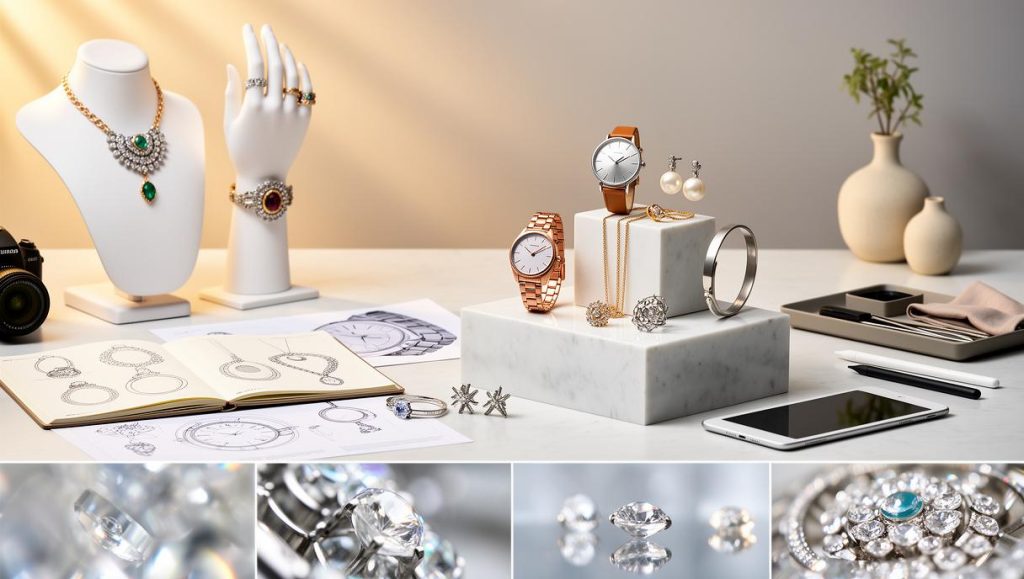
What a Jewellery Content Creation Tool Really Does—and Why It Matters Now
Jewellery brands thrive on detail, texture, and storytelling. Yet traditional photography workflows can be slow, costly, and hard to scale, especially when collections change frequently or when materials and finishes demand meticulous retouching. A modern jewellery content creation tool bridges this gap by turning sketches, CAD files, or simple packshots into studio-grade visuals tailored for e‑commerce, social media, and print. By pairing AI-driven scene building with realistic rendering of metals and gemstones, these platforms eliminate the friction between product design and market-ready imagery.
At its core, a strong tool offers three pillars: speed, consistency, and fidelity. Speed ensures that new designs can be previewed, iterated, and launched in days rather than weeks. Consistency guarantees that every packshot, lifestyle scene, and on-model image adheres to a coherent brand look—no more mismatched lighting or colour drift across channels. Fidelity preserves the lifelike qualities shoppers expect: crisp diamond scintillation, accurate gold warmth, and nuanced reflections that reveal craftsmanship without distracting glare. For a hands-on look at how this comes together in practice, explore this Jewellery content creation tool.
What truly sets a next-gen platform apart is its flexibility. Designers can upload a 3D CAD to visualise concepts before production, or start with a product photo and elevate it to a polished packshot in minutes. Campaign teams can build lifestyle scenes with drag‑and‑drop environments, adjusting perspectives, surfaces, and lighting angles to mirror seasonal moods or regional aesthetics. Need on‑model imagery? Virtual model options let you select skin tone, hand shape, and styling context to reflect your audience with authenticity—without coordinating physical shoots.
Because the output spans 2K and 4K resolution, the same assets work for PDPs, lookbooks, catalogues, and large-format signage. The result is a streamlined content pipeline that supports rapid experimentation, lowers production costs, and scales gracefully across product lines. For artisans, that means getting collections in front of buyers sooner; for growing luxury brands, it means sustaining a consistent, premium identity across every touchpoint while meeting the relentless demand for fresh content.
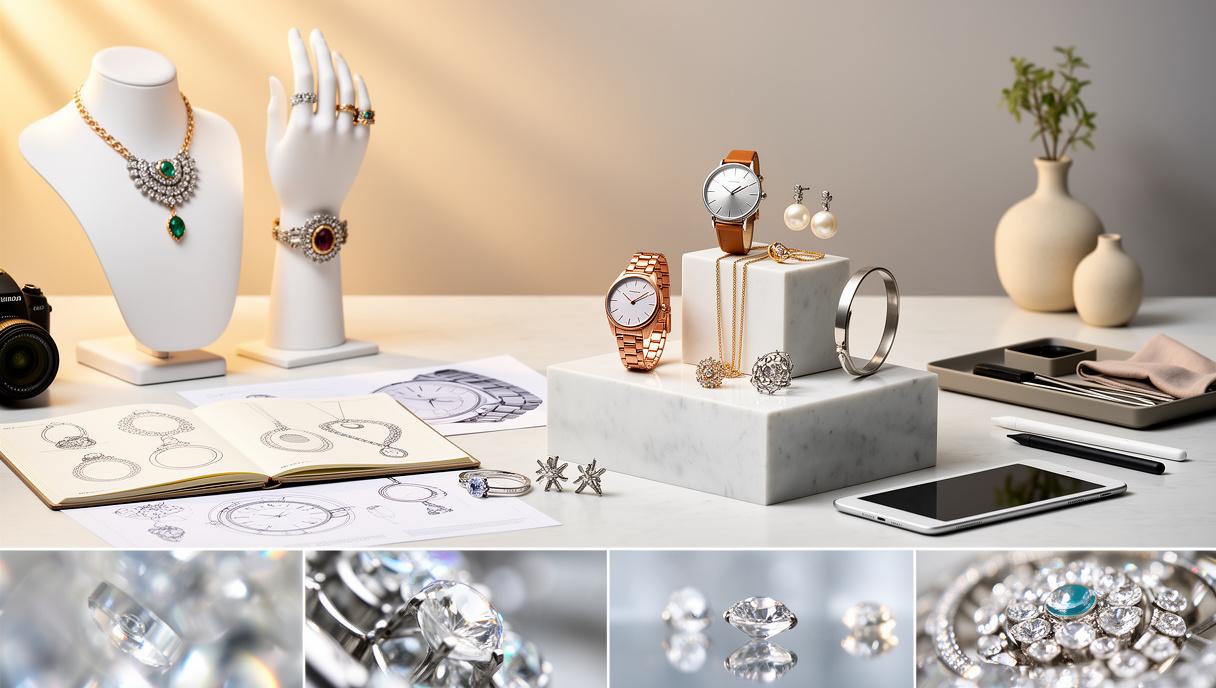
Key Capabilities That Transform Visual Production for Jewellers
One of the most valuable features is advanced packshot automation. Prebuilt lighting rigs mimic real studio setups but can be tweaked on the fly to suit mirror-polished metals, satin finishes, or pavé stones. Tools compensate for micro‑scratches and dust, regulate highlights, and reduce harsh specular hotspots. This makes a ring, bracelet, or watch read clearly at thumbnail size while still rewarding close inspection on zoom—a subtle balance that affects click‑through and add‑to‑cart behaviour.
Beyond packshots, lifestyle campaigns become easier to plan and produce. Instead of booking locations or building sets, creative teams can compose scenes that feel editorial: marble vanities for fine jewellery, soft linen backdrops for bridal pieces, or urban textures for contemporary designs. Accurate shadows, depth of field, and surface reflections ground each product in its environment. Seasonal variations—spring florals, summer sunlight, winter cool tones—can be dialled in quickly, making it feasible to localise campaigns for different markets without multiplying shoot budgets.
On‑model imagery has historically posed the greatest challenge due to casting, skin tone representation, and tight timelines. A robust jewellery content creation tool resolves these hurdles with on‑model options that let you select complexion, hand model types, and styling cues aligned to your brand. Rings can be sized to fingers correctly; earrings sit with accurate drape; necklaces follow the natural fall across the clavicle. This not only boosts realism but also removes the guesswork shoppers face around fit and scale—key drivers of conversion and reduced returns.
In parallel, smart editing and variant generation unlock the data-driven side of content. Teams can spin up multiple angles and crops optimised for marketplaces, Shopify collections, Instagram Reels, or paid ads. Colourway swaps and metal‑finish variants can be visualised before samples exist, accelerating go‑to‑market decisions. Because exports conform to channel‑specific specs while maintaining colour accuracy and resolution, operations remain clean and repeatable. Pull everything together with brand presets—consistent camera height, focal length, background hues, and watermarking—to produce a cohesive aesthetic from product detail to hero banner without manual retouch cycles.
Real‑World Scenarios: How Different Jewellery Businesses Put the Tech to Work
Consider an independent designer preparing a pre‑order drop. With only sketches and a few CADs, it used to be impossible to market the line until samples arrived and a shoot wrapped. Now the workflow is straightforward: upload the CAD files, apply a branded lighting template, generate 2–3 angles per SKU, and build a minimal lifestyle set for social teasers. The designer can test audiences with both neutral and editorial stylings, gauge interest before finalising production volumes, and even A/B test ring sizes on model hands to clarify scale. The speed of iteration turns creative validation into a daily habit rather than a quarterly event.
For a boutique retailer expanding into e‑commerce, consistency is the difference between a curated shopfront and a patchwork catalogue. The retailer can photograph legacy pieces with a smartphone under even lighting, then feed those images into the platform to standardise shadows, match background tones, and remove unintended glare. In a few sessions, the store transforms decades of inventory into a unified digital assortment with uniform aspect ratios and clean negative space—fine‑tuned for PDPs and collection pages. Print-ready 4K exports power window posters and mailers without the cost of reshoots.
A growing luxury brand with an international footprint often needs rapid content localisations. Instead of commissioning separate shoots for each region, the team re‑skins lifestyle scenes to reflect cultural context: warm terracotta for Mediterranean markets, cool concrete and steel for East Asian urban contexts, or botanical accents for eco‑conscious audiences. On‑model images shift to reflect regional preferences in complexion and styling, while product lighting stays consistent to maintain the brand’s visual signature. Because the pipeline is template‑driven, the brand can roll out capsule collections simultaneously worldwide, preserving exclusivity windows and campaign timing.
Even DTC watch and accessory startups benefit from performance optimisation. By generating multiple hero images—clean packshot, on‑wrist closeup, and lifestyle flat‑lay—the brand can test which creative drives the best CTR and ROAS across channels. Subtle refinements, such as adjusting bezel reflections or emphasising a brushed steel texture, can produce measurable gains without reshooting. Meanwhile, operations teams appreciate predictable turnarounds: new SKUs are ingested, matched to predefined lighting setups, and exported to marketplace requirements in one pass. Over time, these efficiencies compound, freeing budget for product development and community building while preserving the studio‑quality visuals that define premium positioning.

Lagos-born, Berlin-educated electrical engineer who blogs about AI fairness, Bundesliga tactics, and jollof-rice chemistry with the same infectious enthusiasm. Felix moonlights as a spoken-word performer and volunteers at a local makerspace teaching kids to solder recycled electronics into art.